













Guide: How to set up and adjust your subwoofer

5 easy steps to get better bass from your subwoofer
A subwoofer can be a fantastic addition to your sound system and provide powerful, deep bass reproduction that many other speakers cannot match. In addition to adding more bass to your listening experience, a subwoofer can also improve the overall sound quality of your system and relieve the other speakers from producing deep bass, allowing them to focus better on the midrange and treble frequencies.
In this guide, you will be introduced to the most important aspects of subwoofer setup, including the optimal placement of the subwoofer in your room, adjusting settings such as crossover, phase, and volume, as well as how you can manage the acoustics to improve your listening experience. By following our step-by-step guide, you will be able to fine-tune your subwoofer and achieve the best possible bass response and sound quality.
Whether you are a beginner or experienced in audio setup, this guide will give you the necessary tools and techniques to get the most out of your subwoofer and optimize your listening experience.
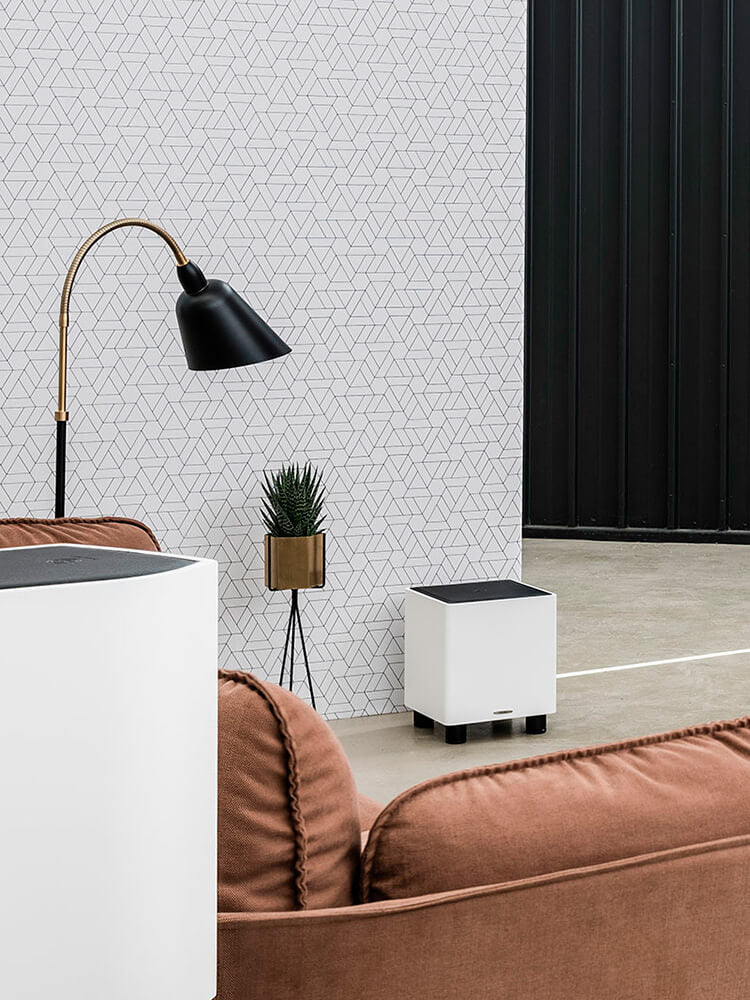
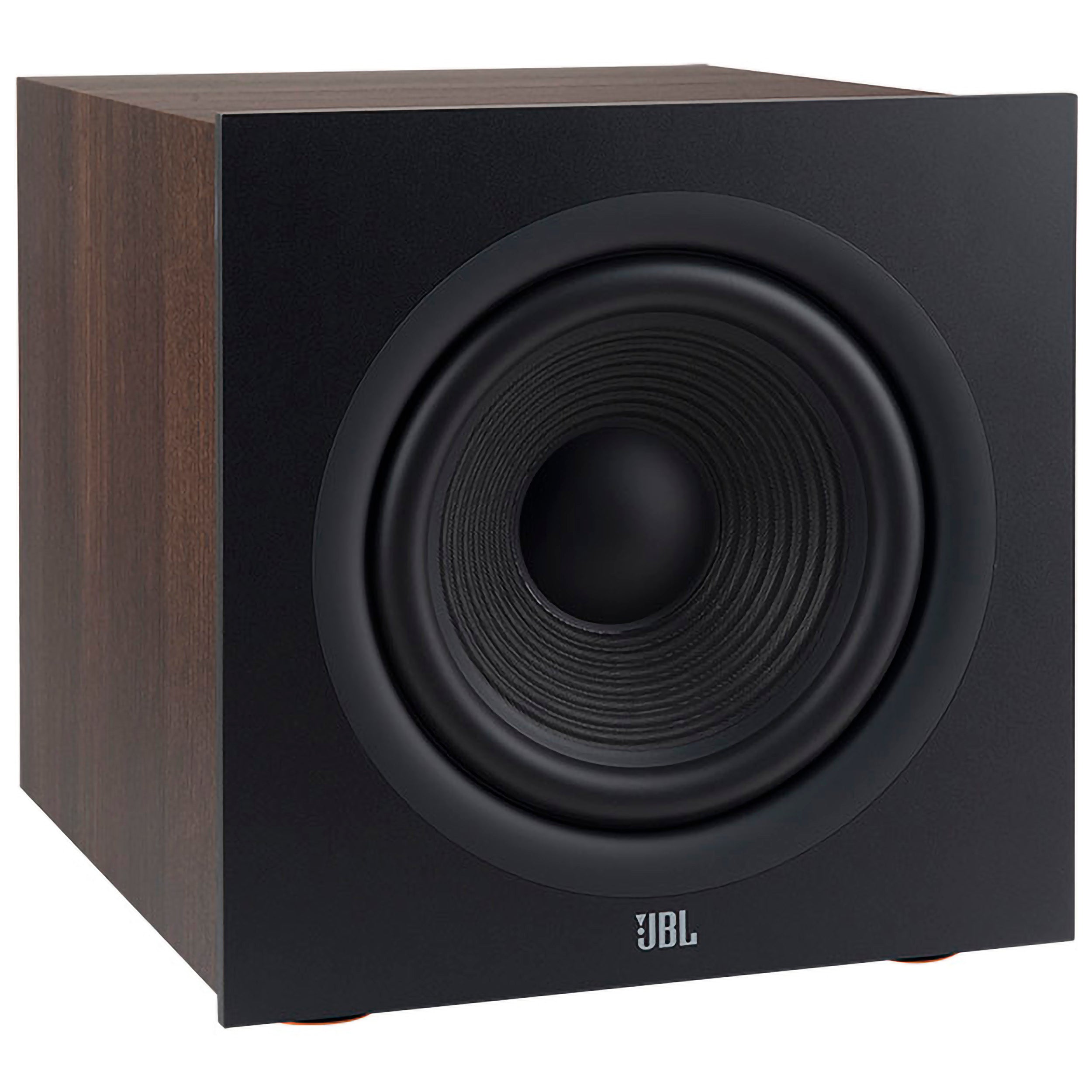
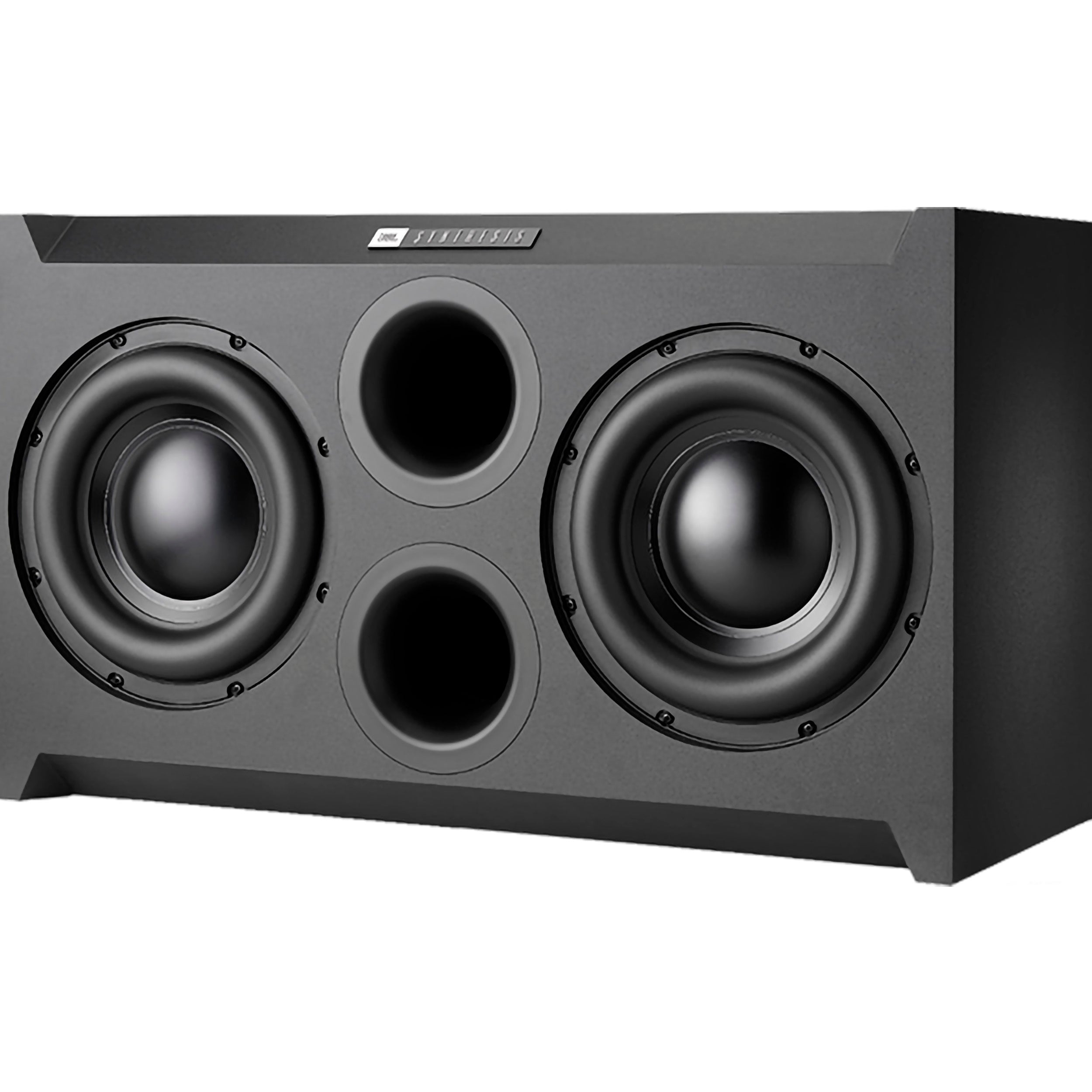
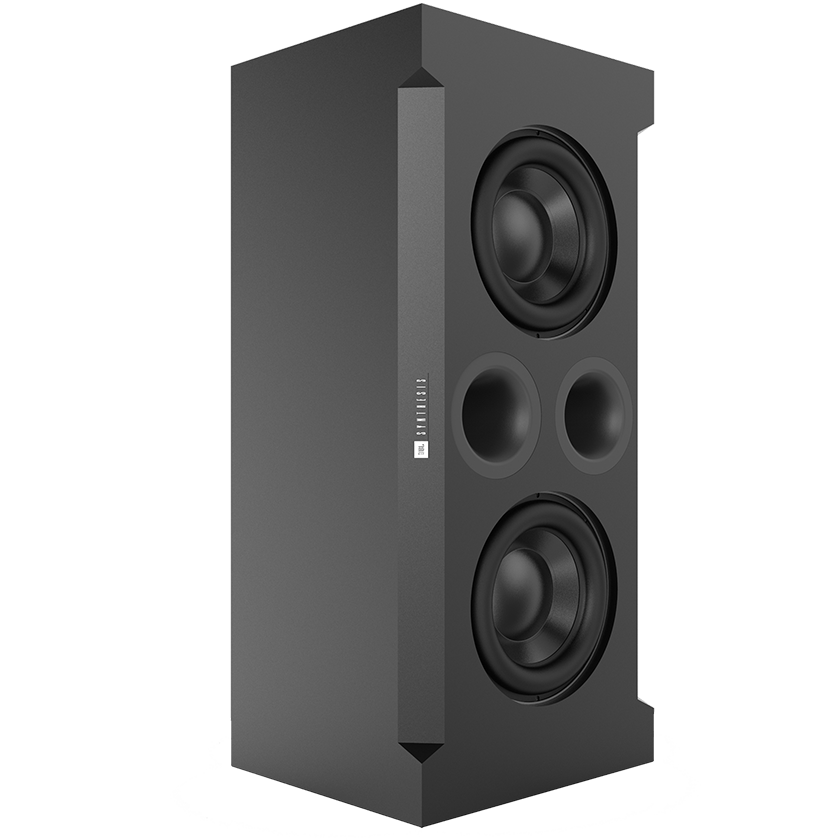
Sonus Faber Gravis i
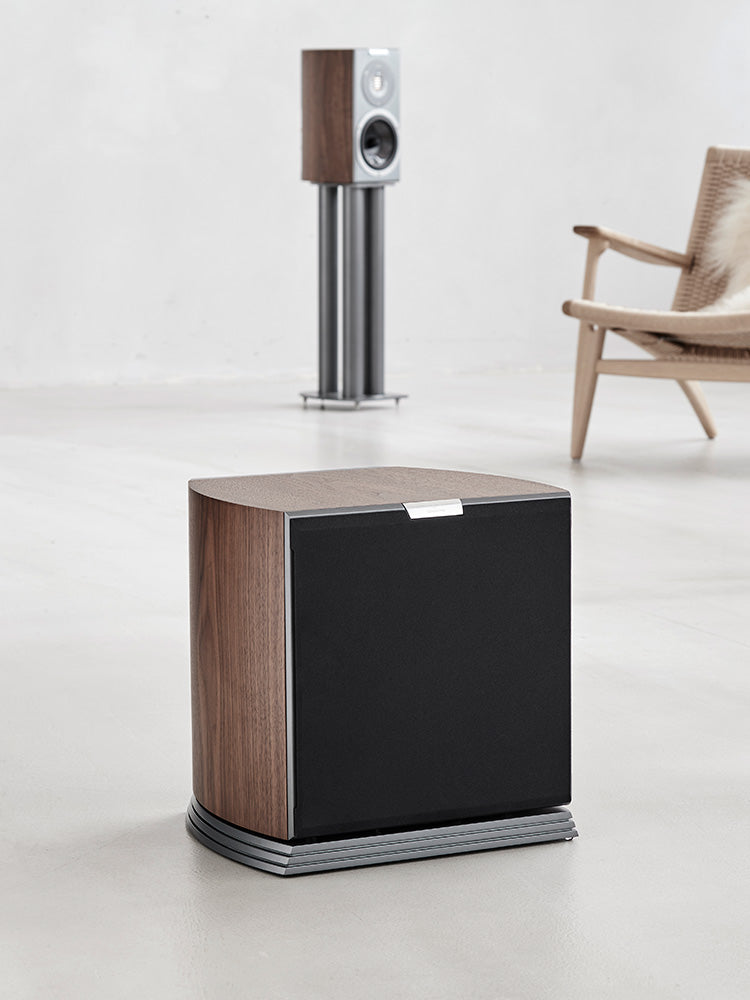
Audiovector r sub
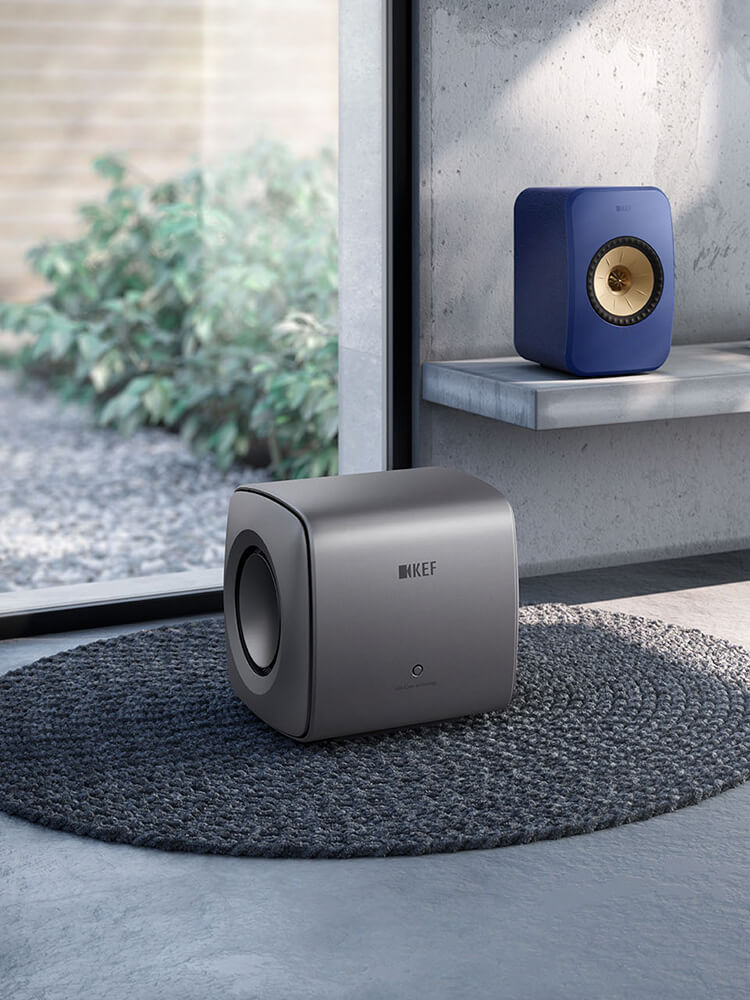
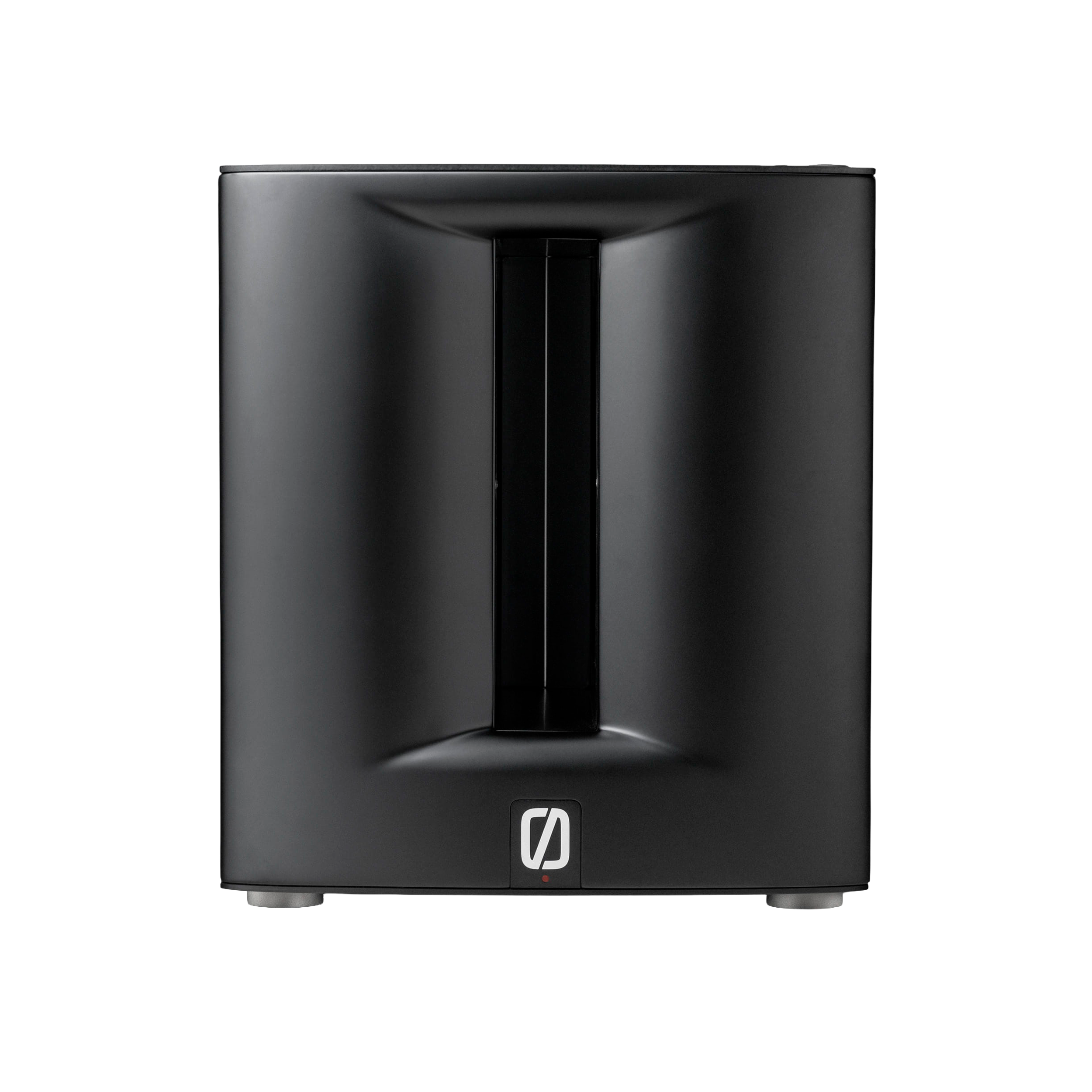
KEF KC62
1. Where should I place my subwoofer?
When it comes to subwoofer performance, placement is crucial. Bass frequencies are particularly sensitive to acoustic factors in the room, so you should carefully consider where you place your subwoofer.
Avoid parallel surfaces such as walls, as they can cause problematic standing waves or areas with no bass. If bass waves reflect and collide with the walls, it can lead to uneven and undefined bass reproduction. It is best to place the subwoofer at least 20 to 30 cm away from the walls to avoid those problems.
We also recommend placing the subwoofer near your front speakers, because this minimizes timing delays and phase cancellation, giving you much more accurate bass reproduction.
Three placements for your subwoofer
How you should place your subwoofer depends to a great extent on the options you have in your room. Often, your listening position is limited to a specific area, so there is not much freedom as to where you can place the subwoofer. Here are our suggestions for how you can get precise, hard-hitting bass in any room.
- Flexible placement: If you have the freedom to place the subwoofer anywhere, then we recommend that you place the subwoofer where you normally listen. Now you should walk and crawl around the room and listen for where the bass is the tightest. In other words—where do you get bass that feels like little punches to the stomach? Mark the spot with tape when you find a place that sounds good, and keep trying other spots to find the best placement.
- Next to the speaker: One of the absolute best places for your subwoofer is next to your speakers. If you have a single subwoofer, you can try listening to whether it sounds better when you place it on the inside or outside of your speakers. If, on the other hand, you have two subwoofers, then you should place them on the outside of your speakers. This is where the interaction between your subwoofer and speakers is at its strongest, and it becomes pure magic.
- Corner placement: Placing the subwoofer in a corner can give you more bass, but it is rarely the ideal solution. If you have to place it in a corner, you can reduce the interaction between the subwoofer and the wall by placing it at least 15 to 20 centimeters away from the corner.
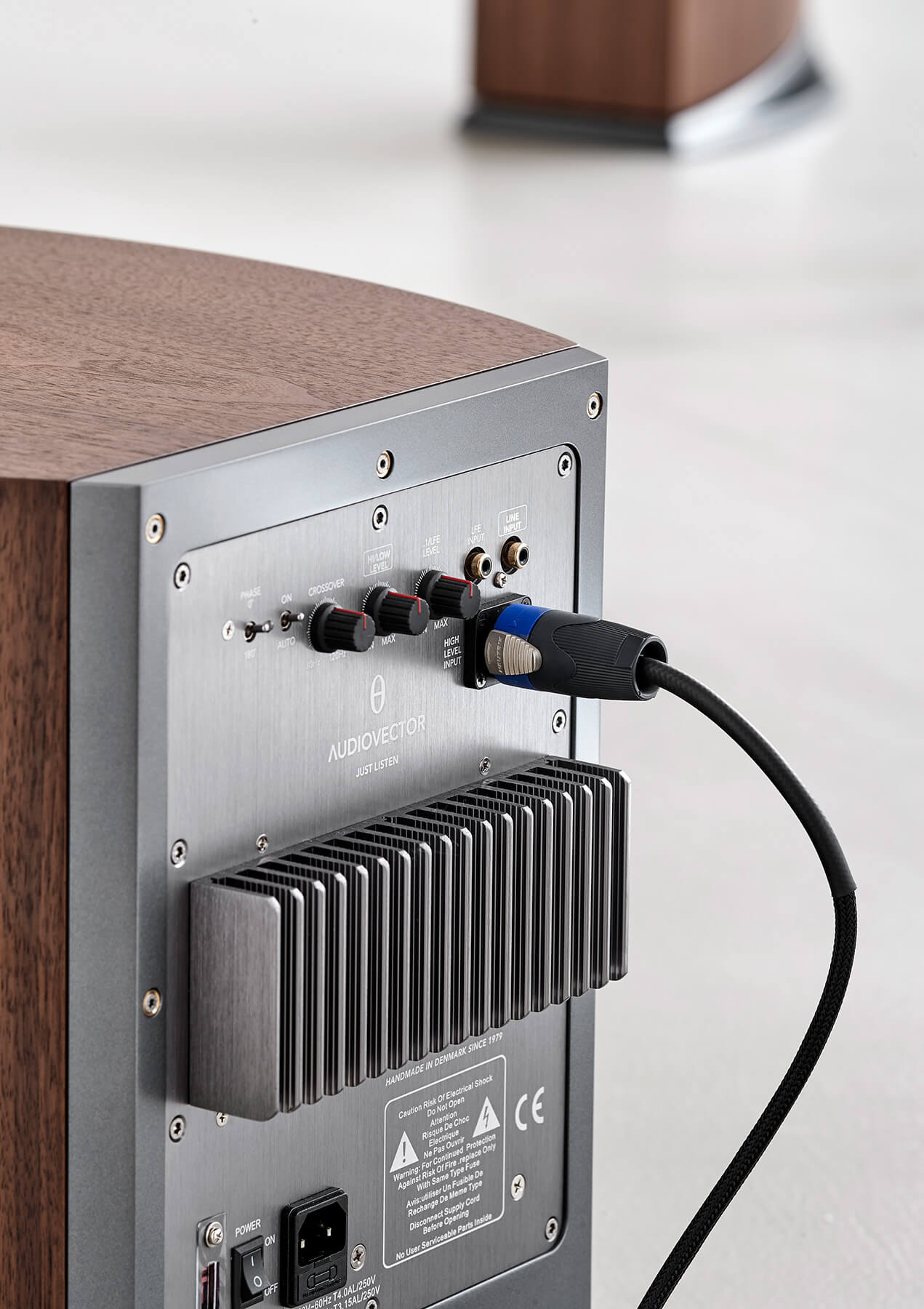
Audiovector R Sub
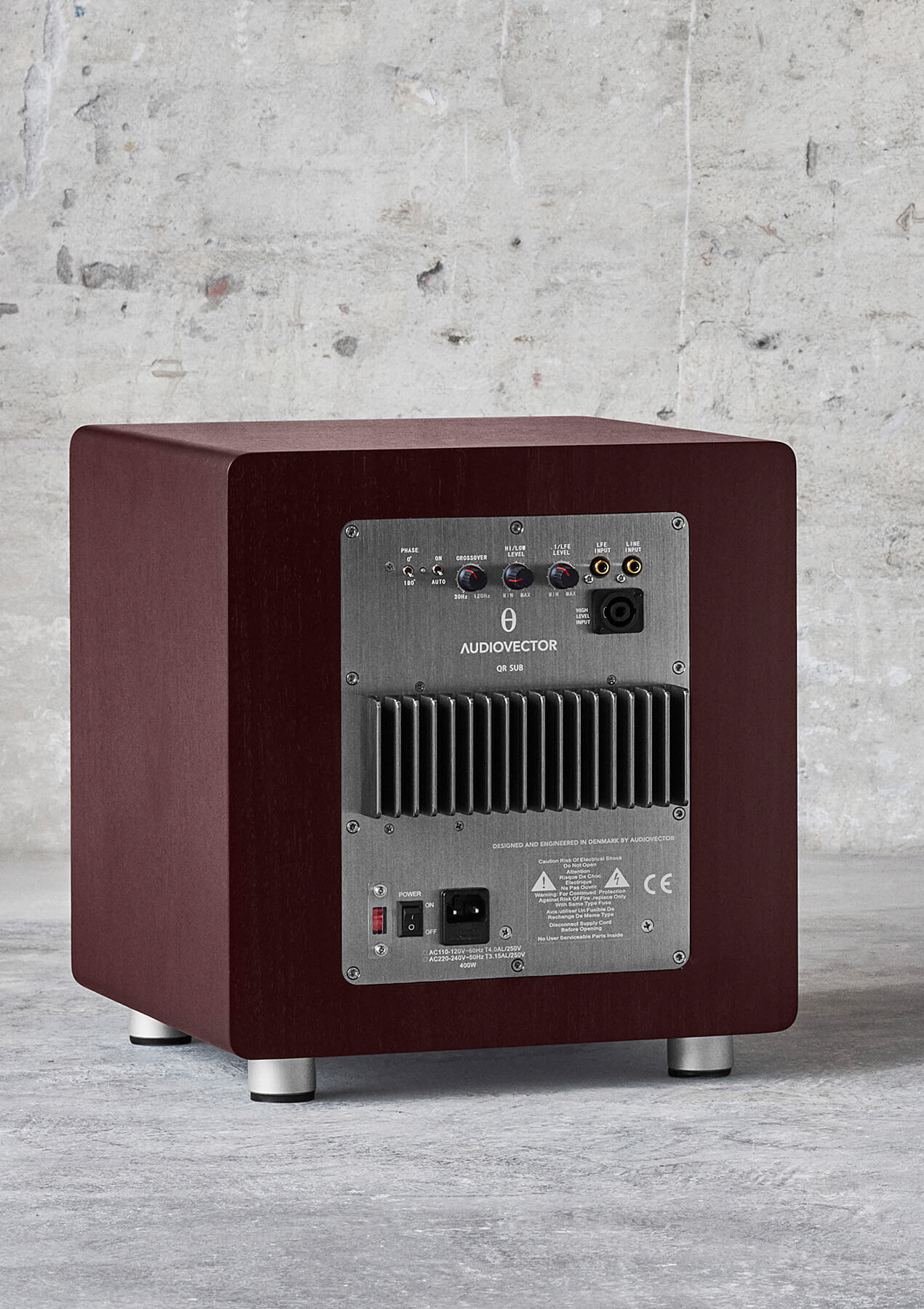
Audiovector QR Sub
2. Calibration of your subwoofer
Once you have found the optimal placement for your subwoofer, it is important to calibrate it to achieve the best bass reproduction. Follow these steps:
- Set the crossover: If your A/V receiver has an automatic crossover setting, let it handle this task. If your AV receiver supports it, set the subwoofer crossover to 100% and let the AV receiver manage everything. If not, set the crossover frequency to start just below the lowest frequency response of your speakers. Then gradually increase the crossover frequency and listen for when the subwoofer and speakers begin to overlap. Use a track like “Dire Straits – Six Blade Knife” to adjust the subwoofer, as the bass and drum pattern sound constant. When you notice that the subwoofer and speakers overlap, lower the crossover frequency slightly again. Then you are guaranteed that the subwoofer is set completely correctly.
- Set the phase: Play a bass-heavy piece of music or a movie scene and adjust the phase on the subwoofer until you achieve the fullest sound. If there are still problems with the bass response, it may be necessary to adjust the placement of the subwoofer and repeat the process.
- Set the volume: One of the biggest mistakes people make is setting the volume too high on their subwoofer. It should not be obvious that a subwoofer is playing. Set the subwoofer’s volume knob to 50% and adjust it depending on whether there is too much or too little bass. Continue this process until the subwoofer’s bass reproduction is integrated 100% with the other channels.
3. Gain control of the acoustics
The acoustics of your room have a major impact on the sound quality you can achieve. That is why it can be an advantage to adapt your room so it does not affect your sound negatively. You can do this by placing various objects in the corners of your room, as this helps improve the acoustics. Fortunately, there are many ways you can improve the acoustics of your room. Therefore, we recommend that you consider the following based on what is possible. Most people have their system in the living room, where bass traps or other sound-absorbing panels may be less desirable. Therefore, it can be beneficial to place an armchair or large plant in the corners, which also improves your acoustics.
- Place an object in the corners of your room to reduce the problem of standing waves. This can be bass traps, other sound-absorbing units, furniture, or large plants.
- If the room has wooden floors or concrete walls, you can lay down a rug to dampen reflections and improve bass response.
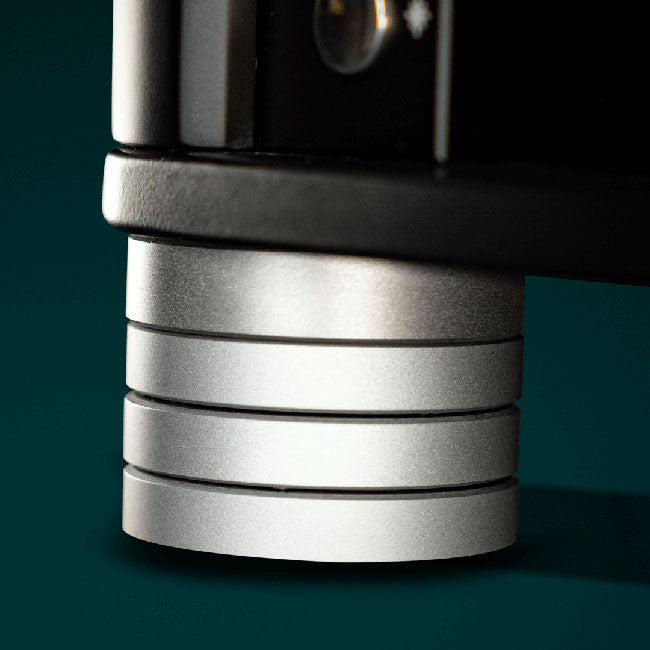
- Consider using floor spikes and protective discs under the subwoofer to minimize resonance and improve overall performance. Here, the isolation feet IsoAcoustics GAIA are absolutely brilliant, and they have practically won every award there is to win.
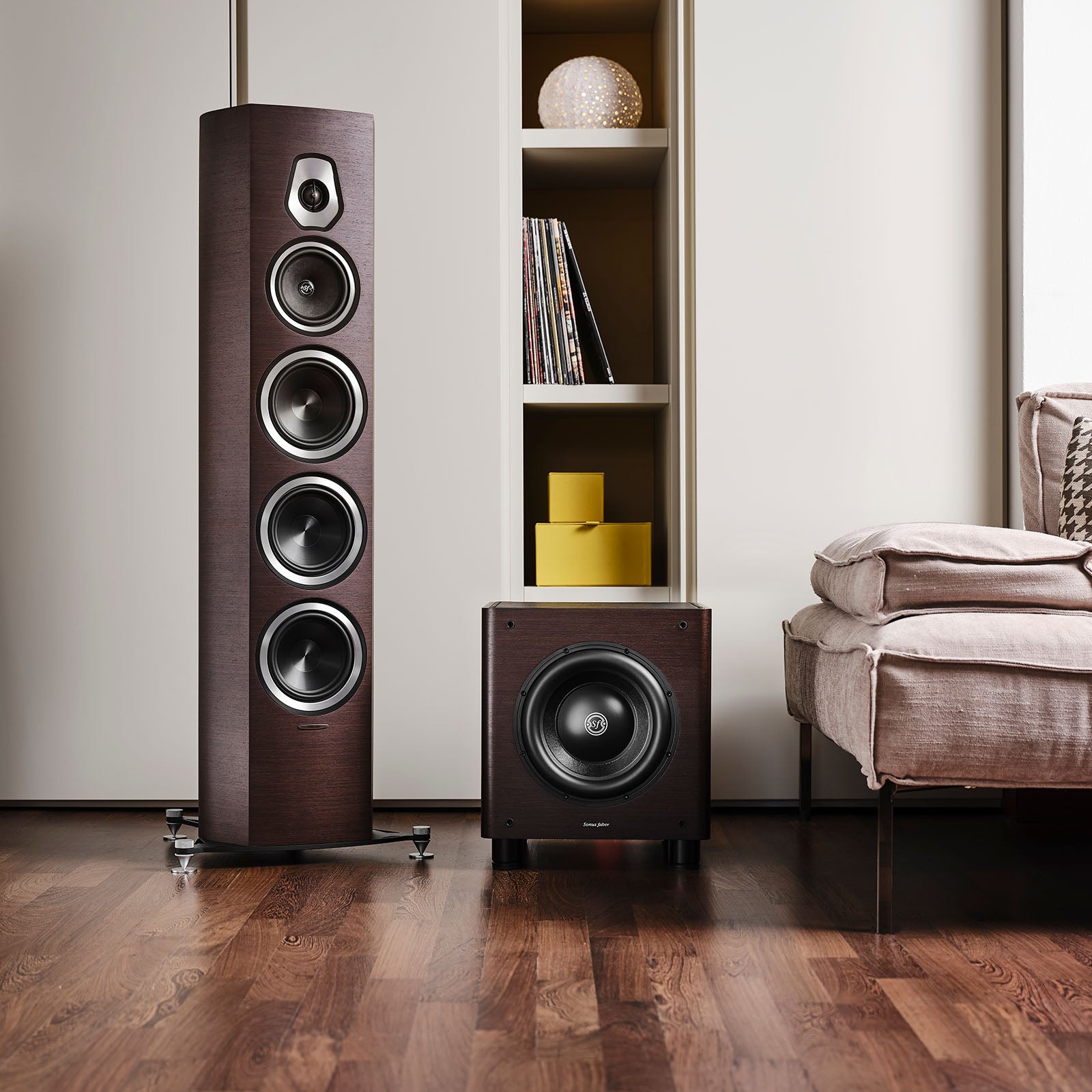
4. Add two subwoofers for better bass reproduction
We're not just writing this to try to sell more. By placing one subwoofer in one corner of the room and a matching subwoofer in the other corner, you achieve a much more even bass response in the room. Put another way, you get easier bass integration when you use two subwoofers instead of just one.
5. Choosing a subwoofer cable
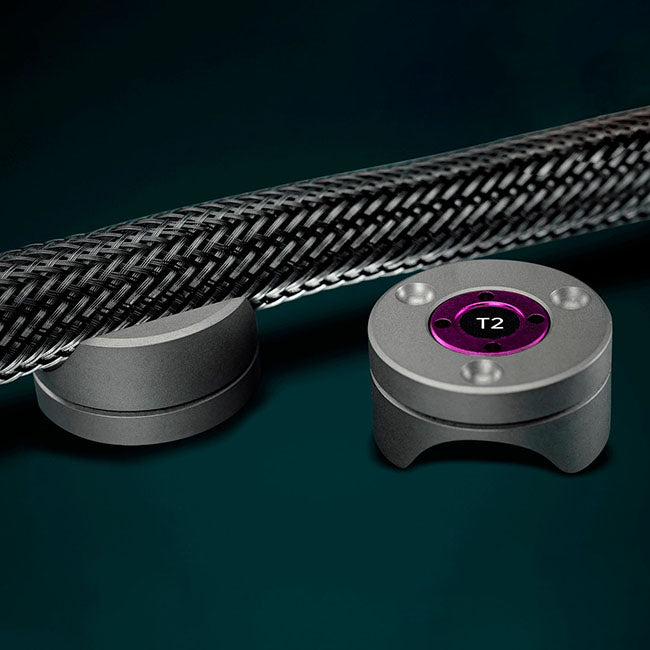
There are two options for cable connections – traditional RCA cables and high-level cables (Audiovector and REL). A high-level cable measures the speaker signal, so it is in სრული phase and timing with what the speaker determines. This is because the signal does not have to pass through yet another preamplifier output on the amplifier. Subwoofers from REL and Audiovector always come with a high-level cable, but unfortunately they are not shielded. You can therefore make a major sonic upgrade by buying a shielded cable. All cables act as antennas, picking up large amounts of noise that contaminates the sensitive signal. A good shielded cable will keep the signal free from this harmful noise.


Get guidance from the audio specialist
If you feel like trying out a subwoofer, you can explore our selection right here. If you are in any doubt about anything related to buying a subwoofer, a cable, or setting it up, do not hesitate to contact one of our specialists at 98 16 14 10 or info@lydspecialisten.dk.
You are also always welcome to stop by the store, where you can listen to the subwoofer and get advice and guidance on how to set it up and calibrate it for your specific system and surroundings.

Read more
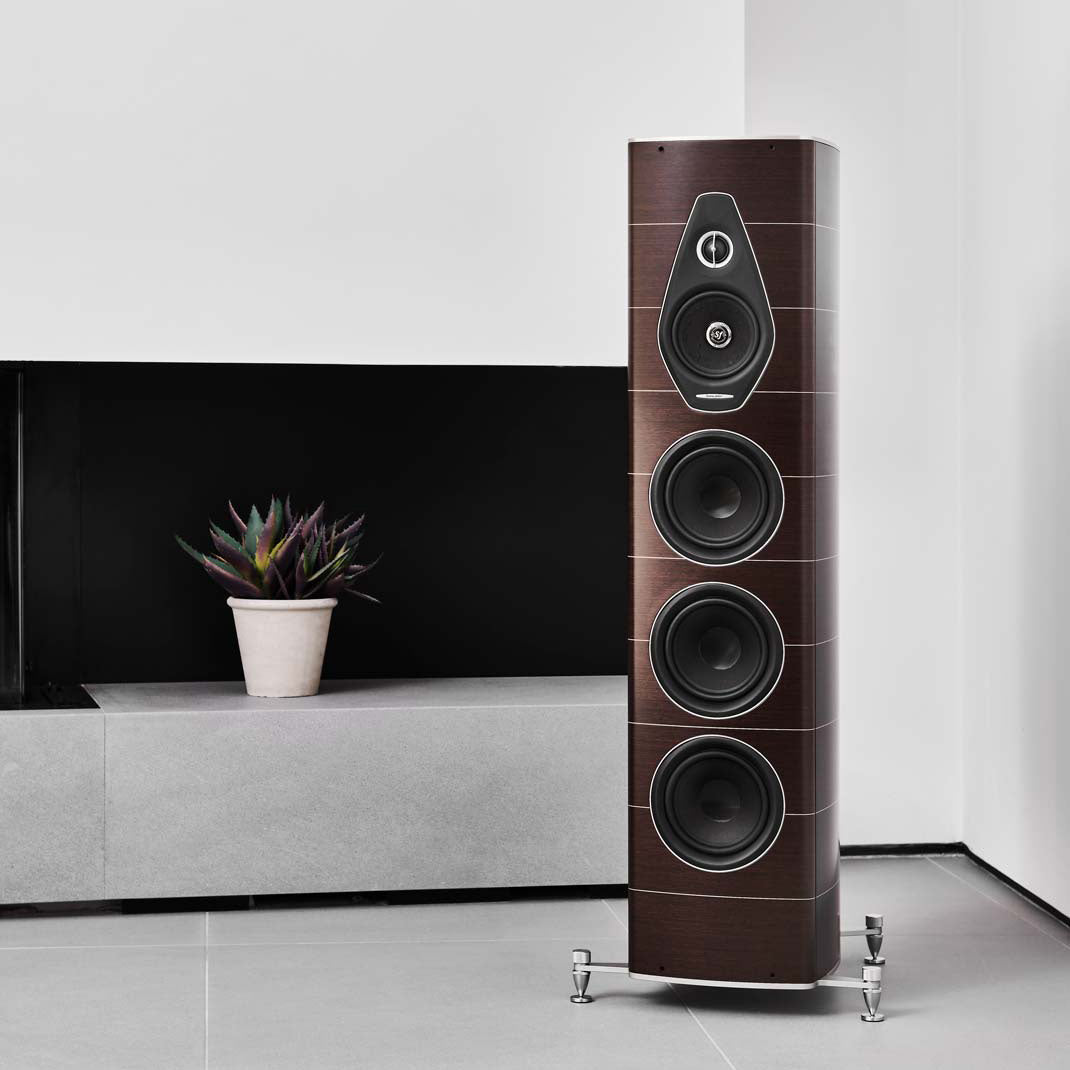
Guide: Get the best sound from your speakers
How you place your speakers in your listening room has a major impact on the sound quality you end up with. Read our experts' advice on how to get the best possible sound from your speakers here.
Read more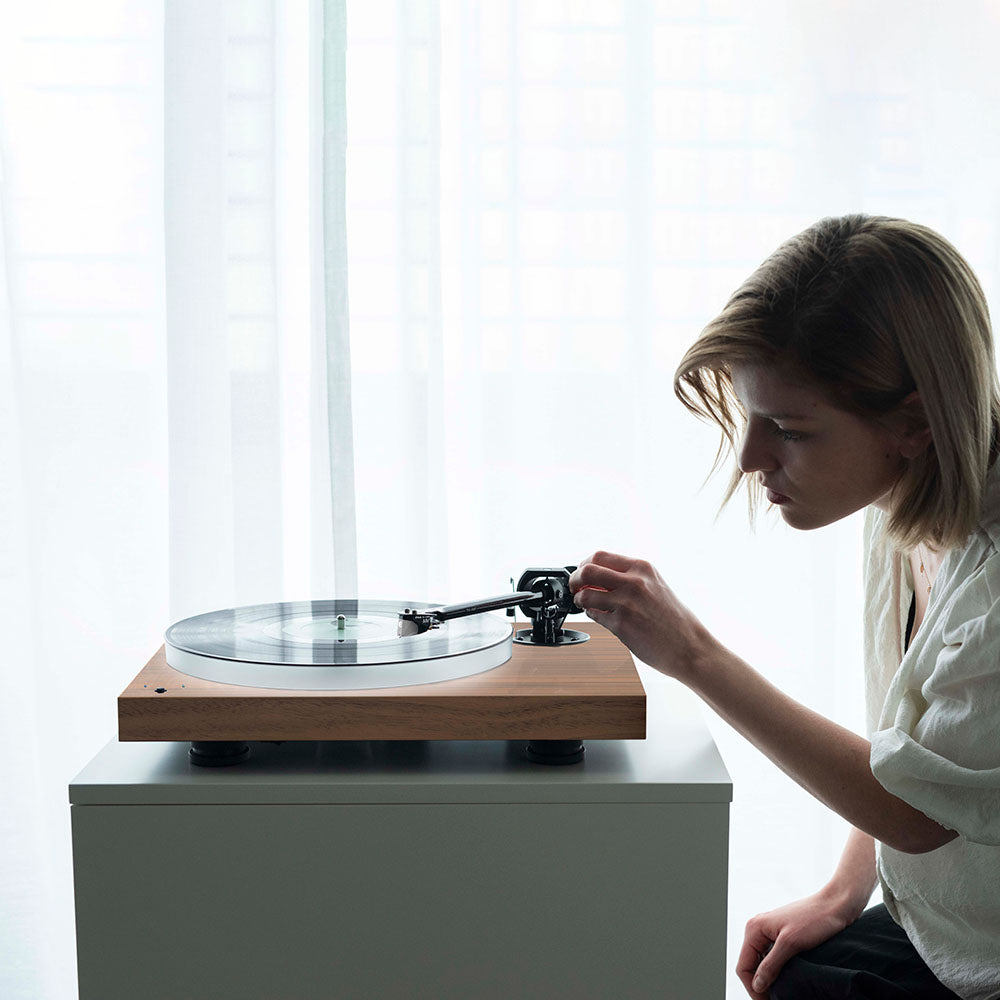
Guide: How to set up your turntable correctly
With a few simple steps, you can get your turntable playing like a dream. Follow these 5 steps to get better sound quality and longer life from your turntable and records.
Read more
